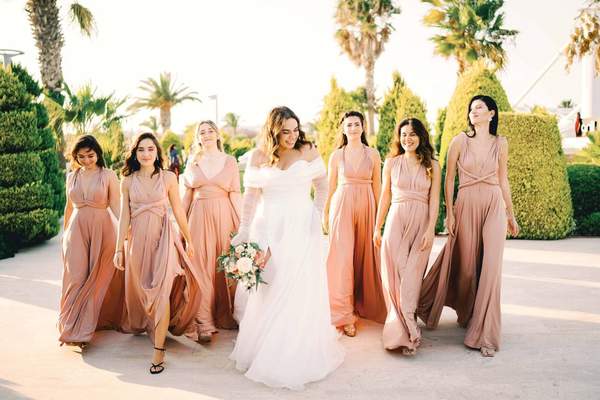
Bridesmaid dresses rarely follow the same schedule as the bride’s gown. One bride may need months of fittings for a structured wedding dress, while a bridal party has a different challenge: getting several people to agree on a look, submit accurate measurements, place orders, receive dresses, and complete alterations on time. A practical bridesmaid dress timeline keeps those moving parts from becoming a last-minute scramble.
For most weddings, start discussing bridesmaid attire about eight to ten months before the date and aim to place orders around six to eight months before. That window gives useful room for made-to-order production, shipping, exchanges, and tailoring while keeping final fit work closer to the wedding.
8 to 10 Months Before: Set the Direction
Start with the decisions that affect everyone: colour, fabric, length, formality, and whether the group will wear one identical dress or coordinated styles. Set a realistic budget and decide who will pay for dresses, alterations, shoes, and accessories.
If bridesmaids live in different cities, do not wait for one date when everyone can shop together. Share a small approved selection, fabric swatches, sizing information, and a clear decision deadline. Good bridesmaid dress planning is usually more about coordinated deadlines than coordinated calendars.
For example, for a 20 September wedding, aim to settle the dress direction by late November or December of the previous year. Give the group a few weeks to try styles or samples, then make the final selection well before spring.
6 to 8 Months Before: Take Measurements and Order
If you are wondering when to order bridesmaid dresses, six to eight months before the wedding is a sensible target for many made-to-order styles. Ready-to-ship dresses can work on shorter schedules, but waiting may reduce size, colour, and style availability.
Each bridesmaid should check the specific brand’s size chart instead of automatically choosing her usual high-street size. Bust, waist, hip, and sometimes hollow-to-hem measurements matter. When measurements fall between sizes, the retailer or a professional fitter can advise on the safer option.
If colour consistency matters, place the group’s orders within the same period where possible. Fabric batches can vary slightly, and the same named colour can also look different in chiffon, satin, velvet, or crepe. For mix-and-match dresses, confirm every approved style is available in the chosen fabric and colour family.
3 to 4 Months Before: Check Every Dress as It Arrives
Do not let delivered dresses remain unopened in garment bags. Each bridesmaid should try hers on soon after arrival and check the colour, size, length, seams, zip, straps, neckline, and embellishments. If an item is wrong or clearly unsuitable, early discovery leaves more time for an exchange.
This is also a useful checkpoint in the wider bridal party attire schedule. Confirm whether the group still needs shoes, jewellery, wraps, shapewear, or specific undergarments. Shoes are especially important because heel height affects the final hem.
6 to 8 Weeks Before: Begin Alterations
A practical bridesmaid alteration timeline usually starts several weeks before the wedding rather than several months before it. Straightforward adjustments may be quick, but formalwear tailors can be busy during wedding and prom seasons, and complex work may require more than one appointment. Starting around six to eight weeks out provides a useful buffer.
Common alterations include shortening the hem, taking in the bodice or waist, adjusting straps, refining the neckline, and improving the fit around the bust. Bring the shoes and undergarments planned for the wedding day so the tailor can judge length and fit accurately.
For a bridesmaid who is pregnant, postpartum, or expecting significant body changes, discuss the situation with the retailer and tailor early. A forgiving silhouette, adjustable style, extra fabric, or later final fitting may be more useful than delaying the entire group’s order.
2 to 3 Weeks Before: Complete the Final Fit Check
By this point, the dress should be essentially finished. Try it on with the correct shoes and undergarments. Walk, sit, raise your arms, and test stairs if the dress is long. A gown that looks perfect while standing still can still be uncomfortable if the hem catches, straps slip, or the bodice restricts movement.
Confirm collection dates and storage. Keep dresses in garment bags in a clean, dry place away from food, pets, smoke, and direct sunlight. If steaming is needed, follow the care instructions for the fabric rather than applying high heat automatically.
The Final Week: Focus on Readiness
The final week should be reserved for light preparation: collecting the dress, removing minor wrinkles, confirming accessories, and packing anything needed for getting ready. Major tailoring at this stage is risky because there is little time to correct a new problem.
Useful related internal topics include a wedding planning timeline, a bridesmaid responsibilities guide, and a wedding attire checklist. These can help readers coordinate dress deadlines with other bridal-party tasks.
What If You Are Starting Late?
If the wedding is only two or three months away, focus on dresses confirmed as in stock or ready to ship rather than made-to-order options with long production times. Keep silhouettes relatively simple, check return policies, and contact a tailor before ordering to confirm appointment availability.
A short timeline can work, but it leaves less room for exchanges, shipping delays, and complicated alterations. At that point, certainty matters: a dress available in the correct size and colour is often more practical than a preferred style with an uncertain delivery date.
Frequently Asked Questions
When should you order bridesmaid dresses?
For many weddings, ordering about six to eight months before the date provides a comfortable buffer for production, shipping, exchanges, and alterations. Ready-to-ship dresses may allow a shorter schedule.
When should bridesmaid dress alterations start?
A first fitting around six to eight weeks before the wedding is a practical target for many bridesmaids. More complex work or busy tailoring seasons may justify starting earlier.
Should bridesmaids buy shoes before alterations?
Ideally, yes. The tailor needs the intended heel height to set the hem accurately, particularly for floor-length dresses.
Can bridesmaids order their dresses separately?
Yes. If the group is geographically spread out, set one ordering deadline and use the same approved retailer or collection. Confirm colour and fabric details carefully so the overall look remains coordinated.
A Timeline That Leaves Room for Real Life
The best bridesmaid dress timeline is a sequence of sensible checkpoints: decide the look eight to ten months out, order roughly six to eight months ahead, inspect dresses as soon as they arrive, begin alterations several weeks before the wedding, and complete the final fit check with time to correct small issues.
That structure gives a bridal party what group planning needs most: clear deadlines and a little margin for the unexpected. With both in place, bridesmaid attire can stay organised without becoming another source of wedding-week stress.