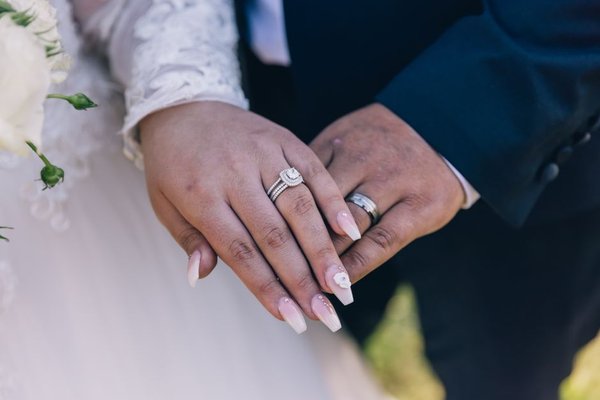
Pairing two rings that will be worn side by side every day is partly a style decision and partly a fit problem. The best wedding band and engagement ring pairing starts by looking at the engagement ring from the side as well as from the top, then choosing a band that works with its shape, setting height, and overall visual weight.
Start With Fit Before You Think About Matching
First ask whether a straight wedding band can sit beside the engagement ring without hitting the basket, halo, prongs, or center stone. High-set engagement rings often leave enough clearance for a straight band to slide close to the shank. Low-profile settings, decorative galleries, hidden halos, and some three-stone designs may block that path and create a visible gap.
A gap is not automatically a flaw. If you want a flush look, however, the band needs to follow or accommodate the engagement ring’s profile rather than forcing the two rings together.
Check the pair from more than one angle
Do not judge an engagement ring wedding band match only from a top-down photo. Look from the side, make a fist, open your hand, and gently move your fingers. Check whether the rings knock together, whether a diamond band rubs exposed prongs, and whether the stack twists.
Match the Band to the Ring’s Shape and Setting
Round solitaires are generally flexible because many straight, curved, and diamond bands can work with them. Elongated stones such as oval, pear, marquise, and emerald cuts can extend farther toward the neighboring band, especially in low settings. A curved, contoured, chevron, or open band may create a cleaner fit.
Halo settings also need a side-view check. A high halo may leave room for a straight band, while a low halo can act like a ledge that prevents the wedding ring from moving inward.
When curved band pairing makes sense
Curved band pairing works especially well when the engagement ring has a low center setting or an outline that projects beyond the shank. The curve creates space for the ring head and can make the two pieces appear intentionally designed as a set. An open band can solve a similar problem by leaving a break at the center.
For example, imagine a low-set oval solitaire whose basket touches a straight band before the shanks meet. Instead of pushing the rings together, try a shallow curved band with a similar width. The contour can nest beneath the oval while keeping the band close without putting pressure on the setting.
Balance Width, Profile, and Detail
Ring stack pairing looks most cohesive when the pieces feel proportionate. A very thin engagement ring beside a wide wedding band creates deliberate contrast, while two similarly scaled bands read as a more unified wedding set.
Also compare the shank profiles. Rounded bands often sit naturally together, while flat-edged or knife-edge designs create a sharper look. If the engagement ring has elaborate pavé, engraving, or milgrain, a plain wedding band can provide visual breathing room. With a simple solitaire, a diamond or textured band can add detail without overwhelming the center stone.
If you are still comparing construction styles, an engagement ring settings guide is a useful internal reference because setting height and basket design affect band clearance as much as stone shape does.
Decide Whether to Match or Mix Metals
Matching metal colors creates the easiest path to a seamless look, but mixed-metal stacks can be equally polished.
Think beyond color. Precious metals and alloys wear differently, and rings that touch every day can scratch one another over time. Gold durability also varies by karat and alloy composition. If the rings have delicate pavé, exposed prongs, or fine detailing where the edges meet, ask a jeweler whether constant contact could affect long-term wear. A wedding band styles guide can also help narrow the choice between plain, pavé, channel-set, eternity, curved, and contoured designs.
Choose Flush, Gapped, or Framed on Purpose
There are three useful ways to think about the finished stack. A flush pairing makes the rings read almost like one design. A deliberate gap keeps each piece visually separate. A framed stack uses one or two curved bands to surround the engagement ring and emphasize its outline.
If you may add an anniversary band later, leave room in your plan now. A very tight two-ring combination can become crowded when a third ring is added.
Test Everyday Comfort Before You Commit
Wearability matters more than a perfect showroom photo. Try the wedding band with the engagement ring long enough to notice pressure points, spinning, pinching, or rubbing. Wider combined bands can feel tighter than either ring worn alone, so sizing should be checked with the full stack when possible.
Do not assume the rings must be soldered together to stay aligned. If alignment is the only issue, discuss non-permanent options and fit adjustments with a jeweler before altering either ring. A ring sizing guide is another useful internal reference when a wider stack changes how the rings feel.
Frequently Asked Questions
Does a wedding band have to sit flush with an engagement ring?
No. A small gap can be intentional and does not mean the rings are mismatched. Flush pairing is mainly a preference, provided the rings are comfortable and are not rubbing in a way that could damage delicate settings.
What wedding band works best with a low-set engagement ring?
Low-set rings often pair well with curved, contoured, chevron, or open bands because these shapes create space around the center setting. The exact fit depends on the basket, halo, side stones, and shank profile.
Should the wedding band be the same metal as the engagement ring?
It does not have to be. Matching metals create a uniform appearance, while mixed metals add contrast. If you mix metal types or karats, ask a jeweler about how the two rings may wear against each other over time.
Can I buy a wedding band that was not made for my engagement ring?
Yes. A matching wedding set can make fit easier, but many engagement rings pair successfully with bands from different collections or jewelers. Focus on clearance, proportions, comfort, and how the rings interact rather than relying only on a brand or collection name.
Make the Pair Feel Like Yours
The strongest pairing is not necessarily the one that looks most perfectly matched in a display case. It is the combination that sits comfortably, protects the settings, and creates the look you want to see every day. Start with physical fit, then refine the shape, width, metal, and details. Once those practical decisions are right, the wedding band can complement the engagement ring without competing with it, and the final stack will feel considered rather than forced.