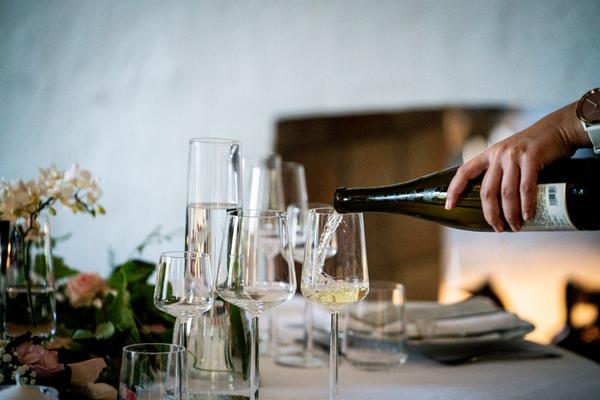
A wedding bar can look simple on a proposal—beer, wine, spirits, bartenders—but the final bill depends on more than the bottles. Guest count, how many guests are likely to drink, reception length, service model, drink selection, staffing, mixers, glassware, taxes, service charges, and gratuities can all change the total. A useful wedding alcohol budget starts with consumption and contract details rather than a single “cost per person” figure.
The goal is not to predict every drink perfectly. It is to build a realistic range, compare vendor quotes on the same basis, and leave room for fees that may sit outside the headline package price.
Start With the Number of Guests Who Will Actually Drink
Begin with your total guest count, then estimate how many guests are legal-age drinkers and how many of those are likely to drink alcohol. Children, non-drinkers, pregnant guests, drivers, and guests who prefer soft drinks should not be treated as identical bar consumers.
A practical planning formula is: drinking guests × estimated drinks per person × effective drink cost. For a package bar, the calculation may instead be drinking guests or total adults × package rate × service hours.
Consumption varies by crowd and event. A common planning approach is to allow for a slightly busier first hour, then fewer drinks in later hours. Treat that as an assumption, not a guarantee. A daytime reception or long dinner may consume differently from a late-night, cocktail-focused celebration.
Choose the Bar Model Before Comparing Prices
Open Bar Package
An open bar package usually charges a fixed amount per eligible guest, sometimes with different rates based on hours or beverage tier. This makes budgeting predictable, but open bar costs can exceed actual consumption when many guests drink lightly.
Consumption Bar
With a consumption bar, you pay for what is served. This can work well for a modest-drinking crowd, but it creates more uncertainty. Ask how drinks are counted, whether opened bottles are charged in full, and how wine served at dinner is recorded.
Hosted Tab or Capped Bar
A hosted tab gives you a maximum spend. Once the limit is reached, service can change to a cash bar, beer-and-wine-only service, or another agreed arrangement. This can protect a wedding bar budget while still offering guests hosted drinks for much of the reception.
BYO Alcohol
Some venues allow couples to supply their own alcohol. The bottle price may look attractive, but the wedding drink budget must also account for corkage, licensed bartenders, delivery, chilling, ice, mixers, garnishes, glassware, setup, cleanup, and venue rules. Check local laws and the contract before assuming BYO is allowed.
Build the Budget From the Quote, Not the Menu Price
Two bar quotes can advertise similar packages and still finish at very different totals. Review every line that can affect the final amount: bartender fees, setup charges, bar rental, ice, mixers, soft drinks, garnishes, glassware, specialty ingredients, corkage, delivery, service charges, taxes, and gratuities.
Also ask which fees are percentage-based and what subtotal they apply to. A service charge may apply to beverages, labor, rentals, or a broader subtotal depending on the contract. Taxes vary by location and type of sale. Gratuity may be included, added automatically, suggested separately, or left to the couple.
When planning the wider event, compare this category with your wedding budget breakdown and wedding catering budget so the bar is treated as a complete service cost rather than only a beverage purchase.
A Practical Wedding Alcohol Budget Example
Imagine a 120-person wedding where you estimate that 95 guests will drink alcohol during a four-hour reception. For planning purposes, you budget for four drinks per drinking guest. That produces 380 alcoholic servings.
Now suppose a vendor quote works out to $8 per served drink. The beverage estimate is $3,040. If the hypothetical contract also lists $500 for bartending, $600 for mixers, ice, and glassware, and a 20% service charge applied to the beverage-and-labor subtotal, your working figure must include those items before any applicable tax or separate gratuity.
The specific dollar amounts are illustrative; vendor pricing varies widely by location, venue, service level, and beverage selection. The useful habit is separating consumption costs from fixed fees and percentage-based charges so you can see what actually drives the total.
Control Costs Without Making the Bar Feel Sparse
You do not need a huge spirits list to create a generous guest experience. Beer, wine, and one or two signature cocktails can offer variety while simplifying inventory. Limiting premium pours or shortening the full-bar service window may also reduce spending when the venue allows it.
Ask which selections overlap across cocktails. A short menu that uses the same base spirits, mixers, and garnishes in several drinks can reduce waste and speed service. If wine is poured at tables, confirm whether those servings are included in the bar package or billed separately.
A wedding vendor budget guide and wedding gratuity guide are also useful companion topics when you are checking the full cost of service.
Questions to Ask Before Signing the Bar Contract
Confirm the guest count used for billing, whether minors and non-drinkers are excluded, what brands are included, how many hours the price covers, and whether overtime is possible. Ask about bartender staffing, last-call timing, unused alcohol, corkage, breakage, insurance requirements, and venue exclusivity rules.
Request a written estimate showing the full calculation. A clear quote makes vendor comparisons easier and prevents a low headline price from hiding mandatory fees.
FAQ
How much alcohol should I budget per wedding guest?
There is no universal alcohol cost per guest because prices and drinking patterns vary. Estimate drinking guests, likely drinks per person, service hours, and the vendor’s pricing model, then add staffing, equipment, service charges, taxes, and gratuities that apply.
Is an open bar cheaper than paying by consumption?
Not always. A fixed open bar can be easier to budget, while consumption pricing may cost less for a light-drinking crowd. Compare both models using the same guest count and realistic drink assumptions.
How can I lower wedding bar costs without using a cash bar?
Consider beer and wine plus signature cocktails, a shorter full-service window, fewer premium labels, or a hosted spending cap. The best option depends on venue rules and the experience you want guests to have.
What fees are commonly left out of the advertised bar price?
Potential extras include bartenders, setup, mixers, ice, garnishes, glassware, corkage, delivery, service charges, taxes, and gratuities. Always confirm what is included in writing.
Finalizing Your Wedding Bar Budget
A reliable wedding alcohol budget is a small model, not a guess. Start with drinking guests and service hours, choose the bar model, estimate consumption, then add labor, supplies, contractual fees, taxes, and gratuities. Keep a modest contingency for guest-count or service changes. Once every quote is converted into the same all-in structure, you can compare options clearly and choose a bar plan that fits both your celebration and your overall budget.