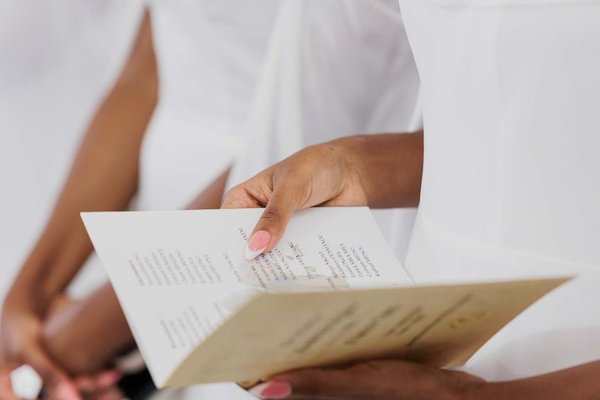
The right words can make a wedding ceremony feel unmistakably yours. A reading might capture the humour you share, the work of building a life together, or a hope you have never quite said aloud. It also gives someone you love a meaningful role without asking them to make a speech. Choosing wedding ceremony readings is less about finding the most famous poem and more about finding words that belong in your particular moment.
Begin With the Feeling, Not the Famous Quote
Before searching for wedding readings, agree on what you want guests to feel. Should the room be warm and reflective, relaxed and amused, or quietly hopeful? Think about how your relationship actually works. A couple who bond over everyday jokes may prefer a playful passage to a grand declaration. Another couple might want something about loyalty through difficult seasons.
Ask yourselves: would we still love these words if nobody recognised the author? Familiarity can be comforting, but personal meaning matters more than popularity.
Explore Reading Styles That Fit Your Ceremony
Poetry That Sounds Natural Aloud
Wedding poems can express complicated feelings in remarkably few lines. Look for clear imagery, a rhythm your reader can follow, and a message that makes sense without explanation. Read the entire poem before choosing it; a beautiful opening sometimes leads to a darker ending that feels wrong for your celebration.
Passages From Books, Letters and Films
Some of the best ceremony reading ideas come from stories you already share. A short novel excerpt about companionship or a passage from a treasured family letter can feel more intimate than a traditional verse. Make sure guests can understand the selection without knowing its original plot or inside jokes.
Religious and Nonreligious Options
For faith-based services, sacred texts or blessings may express beliefs at the centre of your commitment. Nonreligious wedding readings might draw on literature, philosophy, poetry or original words. In a mixed-belief gathering, a passage about care and shared responsibility can offer common ground. Ask your officiant about restrictions before deciding: religious, civil and celebrant-led ceremonies can have different requirements.
Test Your Shortlist Out Loud
Save three to five possible passages, then read them aloud together rather than judging them on a screen. Notice where you naturally pause and whether any line feels awkward or exaggerated. A reading should sound like something you want spoken over your marriage, not something you feel obliged to include.
Check the meaning carefully. A piece can be romantic yet focus on possession or perfection when your values centre on equality and independence. Consider whether references to gender, faith or family represent you. Then picture the words spoken by the person you hope will read them.
How Many Readings Should You Have?
One or two readings suit many ceremonies, but there is no required number. A single thoughtful passage can leave more of an impression than several similar selections. If your service already includes music, personal vows or cultural rituals, you may need only one. You can also choose none.
As a practical starting point, aim for roughly one to two minutes of spoken text per reading. Timing varies with pauses and delivery, so have someone read each piece at a comfortable pace. A 90-second passage that lands beautifully is preferable to five minutes of words that lose the room.
Your wedding ceremony timeline should include the reader walking to the front, settling in and returning to their seat, not just the spoken words.
Place the Reading Where It Has a Purpose
A reading near the beginning can introduce the values behind your marriage. One shortly before the vows can create a reflective pause, while a later reading may send guests into the celebration with an optimistic feeling. There is no universally correct position; build around the emotional flow of the service.
Imagine a couple planning a short garden wedding. They begin with a lighthearted welcome, invite a close friend to read a brief passage about choosing one another in ordinary moments, then exchange vows. The reading becomes a bridge from welcome to commitment rather than an interruption.
Discuss placement with your officiant before finalising the wedding ceremony order. They can help avoid repetitive messages or awkward transitions.
Choose a Reader Who Will Feel Comfortable
Choose someone who matters to you, not simply the person who gives the most polished speeches. A grandparent, friend, sibling or adult child can bring a distinctive voice to the moment. Ask privately and give them an easy way to decline; public reading can feel intimidating even when the invitation is an honour.
Send the final text well ahead of the wedding, including unfamiliar names and pronunciations. Encourage a few aloud rehearsals and provide a printed, large-type copy with sensible line breaks. Arrange a microphone check if the venue is spacious or outdoors. If the reader becomes emotional, a short pause is perfectly fine.
Make It Personal Without Overexplaining
You do not have to rewrite a poem to make it yours. A brief introduction might explain that the passage reminds you of years spent supporting one another through moves, new jobs or family changes. Keep the explanation short so the reading retains its impact.
If you plan to change someone else’s published work, check the author’s rights and seek permission where necessary. Reproducing protected poems or lyrics in printed programmes or online may also require permission. An original passage written by you or someone close to you offers another route.
Consider how the reading connects to writing your wedding vows. It can introduce a shared belief that your personal promises then make specific.
Make the Final Choice Together
Listen to the ceremony script from beginning to end. Does the reading add an idea guests have not already heard? Is it suitable for your setting, beliefs and audience? Can your reader deliver it naturally? Have you checked timing and any permissions? These questions matter more than a selection’s popularity on lists of wedding readings.
Frequently Asked Questions
Can we have nonreligious readings in a wedding ceremony?
Often, yes, particularly in personalised celebrant-led ceremonies. Rules vary for religious and legally regulated services, so confirm permitted material with your officiant or relevant authority.
Who usually reads at a wedding?
Couples often invite a relative or close friend, but the officiant or the couple themselves can also read. Choose someone comfortable with the task rather than following a fixed tradition.
Should wedding readings be serious or funny?
Either can work. Choose a tone that feels authentic and sits comfortably beside the vows. Gentle humour usually works better when it does not depend on a private joke.
Is it acceptable to have no readings at all?
Absolutely. If your vows, music and spoken welcome already express what matters, an additional passage may be unnecessary. The ceremony should reflect your relationship, not a checklist.
Let the Words Earn Their Place
The most memorable wedding ceremony readings let guests hear a little more of who you are together. Choose words you believe, give your reader the support they need, and place the passage where it deepens the moment. Even a brief reading can stay with everyone long after the ceremony ends.