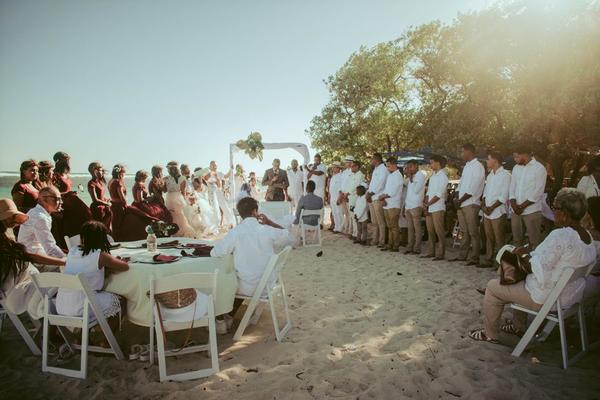
Beach weddings look relaxed, but choosing an outfit can be surprisingly tricky. Sand makes heels difficult, ocean breezes catch loose fabric, and humidity can turn a lovely dress or suit uncomfortable. The best beach wedding guest attire balances the couple’s dress code with the realities of an outdoor ceremony. Before choosing a look, check whether guests will stand directly on sand, walk along a boardwalk, or celebrate on a paved resort terrace.
Start With the Invitation, Not the Scenery
A beach location does not automatically mean casual clothing. Follow the invitation’s wording first, then adapt fabrics and footwear to the setting.
Casual or Dressy Casual
Choose an elevated sundress, polished jumpsuit, or tailored trousers with a crisp shirt. A breathable midi dress or linen-blend separates can look festive without feeling overdressed. Skip swimwear, distressed denim, and ordinary flip-flops unless the couple specifically requests a very informal celebration.
Cocktail or Semi-Formal
A dressy midi dress, sophisticated separates, or lightweight suit fits many seaside weddings. For an evening ceremony, deeper colors and refined accessories can add polish. Keep the silhouette neat even if the fabric is airy.
Beach Formal or Black Tie
For a beach formal wedding guest, consider an elegant maxi dress, formal midi dress, or well-tailored lightweight suit. Black tie is stricter and may require a formal gown or tuxedo despite the seaside location. Never assume that “beach” cancels the stated dress code; ask the hosts if the expectations are unclear.
Pick Fabrics That Breathe and Move Well
Heat and humidity are major considerations when planning seaside wedding attire. Cotton blends and linen blends can be comfortable for daytime events. Lightweight crepe, certain silk blends, and other airy woven materials may offer a dressier finish. Pure linen wrinkles easily, so decide whether its relaxed texture suits the wedding.
Heavy satin, thick synthetic linings, and close-fitting materials can feel uncomfortable in warm weather. Check both the outer fabric and the lining when trying on an outfit. Something that feels light on a hanger may trap heat once fully dressed.
Wind matters, too. A very short, loose skirt may lift during the ceremony, while a long trailing hem can collect sand. Test wrap dresses for secure closures, choose manageable lengths, and check whether sheer fabrics reveal more than intended in direct sunlight.
Outfit Ideas for Dresses, Jumpsuits, and Separates
A midi dress is one of the most versatile choices for a beach wedding outfit guest. Soft florals, terracotta, blue, sage, and other celebratory colors can suit daytime coastal settings. A structured jumpsuit works particularly well when you want coverage without adding a heavy layer.
For formal celebrations, a flowing maxi dress offers elegance, provided its hem stays clear of the ground. Tailored wide-leg trousers with a dressy top are another practical option. Avoid white, ivory, and dresses that could appear bridal unless the couple has specifically requested that palette.
Match the overall finish to the invitation. A simple cotton dress can be perfect for a relaxed ceremony but may look underdressed at an upscale evening reception. Reviewing wedding guest dress codes before shopping can help narrow the options.
Smart Options for Suits and Tailored Clothing
For a casual ceremony, lightweight chinos or dress trousers and a breathable collared shirt may be appropriate. Semi-formal events usually call for a blazer or lightweight suit, while more formal invitations deserve a complete tailored look.
Light gray, beige, soft blue, and navy are versatile choices. Linen blends provide coastal texture; lightweight wool can also drape neatly. Whether a tie is required depends on the dress code, not simply on the temperature.
Test the outfit while seated and walking. A stiff jacket that feels fine indoors may become uncomfortable in midday heat, particularly when seating is unshaded.
Choose Sand-Friendly Wedding Shoes
Thin stilettos sink into soft sand, making them risky for a beach ceremony. Sand friendly wedding shoes include dressy flat sandals, secure low block heels, polished flats, and some wedges. A block heel can still struggle in deep sand, so flats are often the safest choice for an actual beach crossing.
For tailored outfits, loafers or suitable dress shoes work well on boardwalks and firm paths, but loose sand may still be awkward. Before the event, ask whether the ceremony itself takes place on sand or on a constructed platform.
If the vows are outdoors and the reception is inside, bring two pairs: practical shoes for the beach and dressier shoes for dinner. Break both pairs in beforehand. A blister from an unfamiliar strap is a poor wedding souvenir.
Dress for Sun, Wind, and the Evening Chill
Coastal weather can change over a few hours. Apply sunscreen before dressing and let it absorb to reduce marks on fabric. Keep sunglasses available for the walk to the venue, but be considerate of the ceremony’s tone and photographs.
A light wrap, refined cardigan, or unstructured jacket can help after sunset. Secure jewelry and choose a small bag that will not swing in the wind. Avoid large hats that could obstruct another guest’s view unless hats are clearly encouraged. For finishing touches, consider guidance on wedding guest accessories.
Try This Real-World Outfit Test
Imagine a 5 p.m. ceremony on open sand followed by dinner on a resort patio. A guest in a breathable midi dress, secure flat sandals, and a lightweight evening wrap can move between both settings comfortably. Another guest might wear lightweight suit trousers, a collared shirt, loafers on the terrace, and a blazer for the reception.
At home, wear the full outfit for ten minutes. Sit, walk, bend to adjust your shoes, and stand near a fan to see how hems behave. Pack a backup pair of shoes and an evening layer. A destination wedding packing checklist can help you remember other practical essentials.
Frequently Asked Questions
Can I wear black to a beach wedding?
Yes, unless the invitation specifies otherwise. Black is especially suitable for evening or formal celebrations. Choose breathable fabric for warmer daytime events.
Are sandals appropriate for beach wedding guests?
Dressy sandals often work for casual, cocktail, and some beach formal events. Ordinary rubber flip-flops generally look too informal unless the couple expressly permits them. For black tie, check the hosts’ expectations.
What if the ceremony is on sand but the reception is indoors?
Dress for the more formal portion of the celebration and adapt your footwear to the beach. Carrying a second pair for the indoor reception is a simple solution.
Do I need a floor-length dress?
Not necessarily. A long dress suits many formal weddings, but cocktail and casual dress codes may be better served by midi or knee-length styles. Keep any long hem clear of sand.
Feel Comfortable Without Dressing Down
Great beach wedding guest attire respects the occasion and the setting. Let the invitation determine the formality, then choose breathable material, stable shoes, and a layer for changing temperatures. Once your outfit handles the sun, sand, and sea breeze, you can enjoy the celebration instead of constantly adjusting what you wear.