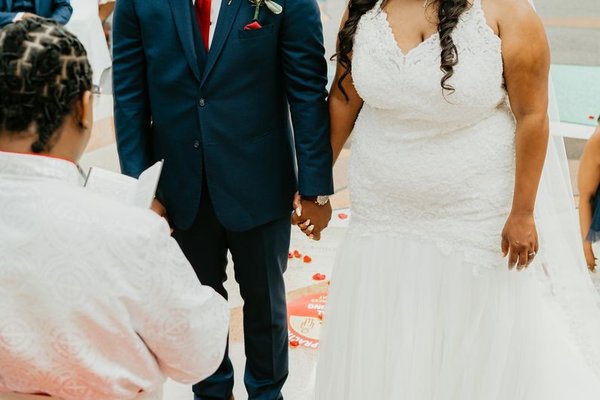
Shopping for a wedding dress should feel exciting, but sample sizing, unclear size charts, and limited salon stock can complicate the process. For plus-size brides, treat each appointment as a fit-and-construction session rather than a test of whether your body matches a sample gown. The tag matters less than whether you can evaluate the dress properly, feel supported, and get knowledgeable guidance.
Start With Measurements, Not Your Everyday Size
Bridal sizing is not standardized across every designer, so do not assume your usual clothing size will translate directly to a wedding gown. Brands may use different charts or proportions. Start with current bust, waist, and hip measurements and compare them with its designer’s size chart.
If your measurements fall into different sizes, that is common. A stylist may recommend ordering for the largest relevant measurement and altering other areas, because taking a gown in is often easier than adding room. Ask to see the designer’s chart and have the stylist explain which measurement drives the recommended size.
Ask About Sample Sizes Before You Book
An impressive online collection does not guarantee that a local store has those gowns available to try in your size. Before booking, ask the salon about its floor samples. An inclusive plus size bridal salon should be able to describe its sample-size range, which designers offer extended sizing, and how fittings are handled when a sample is not an exact match.
Ask what the largest floor sample is, how many gowns are near your measurements, whether the store carries plus size bridal gowns from several designers, and whether a loaner sample can be requested. Also ask about any extended-size charge. Specific answers help you avoid an appointment where most dresses cannot be evaluated meaningfully.
Judge the Construction, Not Just the Silhouette
Silhouette matters, but supportive construction can make an even bigger difference to comfort. Look at the inside of the gown. Boning, corset-style structure, substantial lining, supportive straps, secure cups, and well-placed seams can affect how a dress feels. Some designers build these features into fuller-size ranges rather than simply scaling up a smaller pattern.
Not every plus-size bride needs a heavily structured gown. Soft A-lines, fitted crepe styles, chiffon gowns, and many other shapes can work beautifully. Focus on what the dress does for you. Can you breathe comfortably? Does the neckline stay in place? Does the waist seam sit correctly? Does the bodice feel secure without digging? Curvy bride dress shopping is easier when you judge those details instead of following silhouette rules.
Use the Appointment to Test Real Wedding-Day Movement
A gown can look excellent while you stand still and feel different once you sit, walk, reach, or dance. During the appointment, move naturally. Sit, take several steps, raise your arms as if hugging someone, and turn side to side. Check shoulder movement in sleeves or straps, and make sure a fitted skirt allows a comfortable stride.
Imagine that you love a fitted lace gown, but when you sit the neckline shifts because the sample is too tight through the ribcage. That does not necessarily mean the style is wrong for you. A better-fitting sample or stronger internal support may solve the problem. Ask the stylist which issues come from the sample being the wrong size and which are inherent to the design.
Know What Clips and Panels Can and Cannot Show
Salons may use clips when a sample is larger than you or modesty panels and other fitting methods when it is smaller. These tools help approximate the finished look, but they do not perfectly reproduce the correct size. Heavy clipping can change seam placement, while a sample that will not close may distort tension across the bodice and neckline.
If a sample is several sizes away from your measurements, ask what can still be judged accurately. You may be able to evaluate fabric, neckline, skirt volume, and overall style while remaining uncertain about bust support or waist placement. This helps you avoid rejecting a promising gown because of poor sample fit.
Plan Alterations Before You Commit
Alterations are normal for many wedding dresses. Hemming, strap adjustments, bust shaping, bustle work, and waist refinements are common. Before buying, ask whether the salon has an in-house alterations team or recommends an experienced bridal tailor, when fittings should begin, and which changes are realistic for that particular gown.
If you want more coverage or support, ask about changes before ordering. Depending on the design, an experienced professional may add straps, adjust cups, raise a neckline, modify sleeves, or improve internal support. Large redesigns can become expensive, so it is usually wiser to choose a dress that already meets most of your needs.
Create a Shortlist Based on How You Want to Feel
Photos are useful, but they can narrow expectations too early. Try one or two silhouettes outside your original plan if you are curious and the stylist can explain why the construction may work well. You never need to try a style that makes you uncomfortable. Inclusive bridal sizing should expand your options, not turn the appointment into a test.
A practical shortlist might include one gown that feels effortless, one that gives strong support, and one that delivers the look you pictured. Compare them on comfort, movement, alterations, total cost, and how confidently you can imagine wearing each for several hours. Related topics include bridal gown silhouettes, wedding dress alteration timelines, and choosing bridal undergarments.
FAQ About Plus Size Wedding Dress Shopping
Should I buy a wedding dress in my usual clothing size?
Not automatically. Bridal size charts vary by designer, so order from current body measurements and the chart for the exact gown. Ask which measurement determines the recommended size and how the remaining areas can be altered.
What if the salon does not have my exact sample size?
A nearby size can still be useful, but ask what the sample can and cannot show accurately. If it is much smaller or larger than your measurements, request other samples, a loaner gown, or a similar style with comparable construction.
What should I wear to a bridal appointment?
Choose comfortable, well-fitting undergarments that make you feel secure. A strapless bra is not required for every gown because many dresses include built-in structure. Bring shoes with a similar heel height to your planned wedding shoes if you have them, and treat shapewear as optional rather than mandatory.
How can I tell if a salon is genuinely size-inclusive?
Look for specifics. Ask how many samples are available near your size, the largest floor sample, which designers offer extended sizes, and how stylists handle fittings when a sample does not close. A good salon should answer clearly and respectfully.
Choose the Dress That Works Beyond the Mirror
The best plus size wedding dress shopping experience combines realistic sample access, accurate measurements, thoughtful construction, and a stylist who treats fit as a technical issue rather than a judgment about your body. Focus on support, movement, and clear explanations of sizing and alterations. When those pieces are in place, the decision becomes less about chasing a tag number and more about finding a gown you can comfortably wear and enjoy from the ceremony through the last dance.