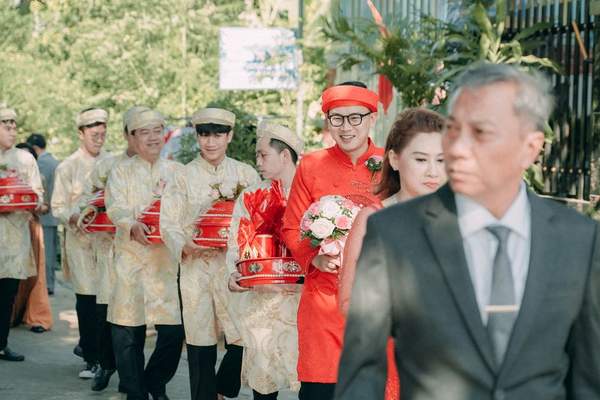
The wedding ceremony processional order seems simple until someone asks where the grandparents go, whether the groom walks in, or which bridesmaid should lead. These decisions are easier to make before the rehearsal than while everyone waits at the back of the aisle. A clear entrance plan tells each person when to move, who accompanies them, and where to go at the front.
There is no single order that fits every wedding. Religious customs, family relationships, and the ceremony space all influence the sequence. Still, a familiar framework gives you somewhere useful to start.
Typical Wedding Processional Order at a Glance
For many Western Christian-inspired or nonreligious ceremonies, this is a common wedding processional order, rather than a rule everyone must follow.
The officiant enters or takes a position at the front. Grandparents and other honored relatives may be escorted to reserved seats. Parents who are participating in the entrance follow. One partner, often the groom in a traditional arrangement, may enter from the side with attendants or walk down the aisle.
The wedding party comes next, individually or in pairs. The honor attendant usually enters toward the end of this group. Ring bearers, flower children, or other junior attendants follow, if included. Finally, the other partner, often the bride in a traditional arrangement, makes the last entrance alone or with an escort.
Who Walks Down the Aisle, and With Whom?
Officiant and First Partner
The officiant often begins at the front rather than making a formal entrance. In many ceremonies, the groom and best man also come in from a side entrance. If there is no side door, they can walk down the aisle before the family or wedding party. Alternatively, the first partner can enter with one or both parents.
Grandparents, Parents, and Important Relatives
Grandparents may walk with an usher, another relative, or a partner, then sit in the front row. Parents can enter together, separately, or with a family member. There is no obligation to include every relative in the formal procession; some may prefer to be seated quietly beforehand.
For blended families, agree on the order without treating it as a ranking of relationships. A stepparent, guardian, sibling, or another important person can have a meaningful place. If someone needs mobility support, allow enough time and arrange an escort or accessible route rather than expecting everyone to walk at the same pace.
Bridesmaids, Groomsmen, and Honor Attendants
The bridal party processional can use pairs or solo entrances. With paired entrances, attendants generally separate at the front and move to assigned places. If they enter individually, one group may come before another, or their entrances can alternate.
A practical approach is to work backward from the ceremony lineup. Attendants standing farthest from the couple enter first. The maid or matron of honor and best man, when processing, enter closer to the end and stand nearest the couple. This avoids awkward crossing at the front.
Children and the Final Entrance
Ring bearers and flower children usually enter just before the final partner. Young children should have a familiar adult waiting near the front and a plan to sit down if standing through the ceremony feels difficult. If a child decides not to walk, simply continue.
The final entrance often features the bride with a parent or escort, but anyone can walk alone, with two escorts, or alongside their partner. It is your moment to define.
How Traditions Affect the Ceremony Entrance Order
In Catholic weddings, the priest, couple, attendants, and family may follow a parish-specific procession linked to the opening liturgy. Ask the priest or ceremony coordinator before setting the order, particularly when deciding who escorts the couple and which music is permitted.
In many Jewish weddings, both partners are escorted by their parents, who may stand beneath the chuppah. A rabbi or cantor may enter first, followed by family members and attendants. The exact sequence varies by community and family, so discuss it with your officiant rather than relying on a generic template.
For secular, interfaith, and LGBTQ+ ceremonies, entrances can reflect the people and relationships you want to honor. Both partners might enter separately with parents, meet halfway down the aisle, or walk in together. Attendants need not be separated by gender. Other cultural ceremonies have their own customs and deserve the same careful planning.
A Realistic Processional Plan for a Small Wedding Party
Picture a garden ceremony with two partners, four attendants, two sets of parents, a grandparent who prefers to remain seated, and a five-year-old flower child. The officiant waits at the front. Both sets of parents enter and sit. The first partner walks with a parent. Four attendants enter individually, starting with those who will stand farthest away. The flower child follows, with a parent waiting in the front row. The second partner makes the final entrance with a sibling.
Turn Your List Into a Rehearsal-Ready Plan
Write each participant’s name in entrance order, along with their escort, starting position, destination, and music cue. For parents, specify the reserved seat. For attendants, note which side and standing position they will take. Share the same version with your officiant, coordinator, musicians, and whoever lines people up.
Rehearse the handoffs, not just the walking. Identify where the final escort steps aside, who takes a bouquet if needed, and whether children sit or stand. Have each entrant wait until the person ahead has moved far enough down the aisle. A short aisle may require a different walking pace or music cue.
Keep a wedding ceremony timeline, wedding rehearsal checklist, and wedding ceremony seating plan alongside your entrance sheet. Each answers a related question without cluttering the instructions.
Frequently Asked Questions
Does the groom walk down the aisle?
He can. In some ceremonies, the groom enters from the side with the officiant or best man. In others, he walks down the aisle alone or with parents. The venue and ceremony customs help determine the best choice.
Do parents walk before or after the wedding party?
Parents commonly enter or are seated before attendants in many Western ceremonies. Religious practices and family preferences can change that sequence, so confirm it with your officiant.
What if the wedding party has uneven numbers?
Have attendants walk individually or arrange a combination of solos and groups. You do not need an extra person solely to create matching pairs.
Who walks last in a wedding processional?
Traditionally, the bride enters last in many Western ceremonies. Modern couples can choose either partner for the final entrance or enter together.
Make the Order Clear, Then Enjoy the Moment
A good wedding ceremony processional order does not need to be complicated. Begin with the customs that matter to you, settle who walks down the aisle and with whom, and give each person a clear destination. After rehearsing the sequence, everyone can focus less on their cue and more on the reason they are there.